Hair Removal Salon Simulator is scheduled for its full Steam release on November 10, developer Yoshio Games and publisher 2P Games have announced. The management sim combines direct control of grooming tools with staffing, equipment purchases and customer reviews, turning an individual appointment into part of a larger business loop.
The October 27 release notice attached to the demo specifically describes a complete release with an ending, rather than an Early Access launch. A free demo is already available, containing a selection of the core systems rather than the full progression.
Updated November 6: the main Steam product page currently displays November 9, while the dated publisher and developer announcements say November 10. The announced date is retained here, with that storefront discrepancy made explicit rather than silently converting it into a different confirmed launch day.
Precision affects the business
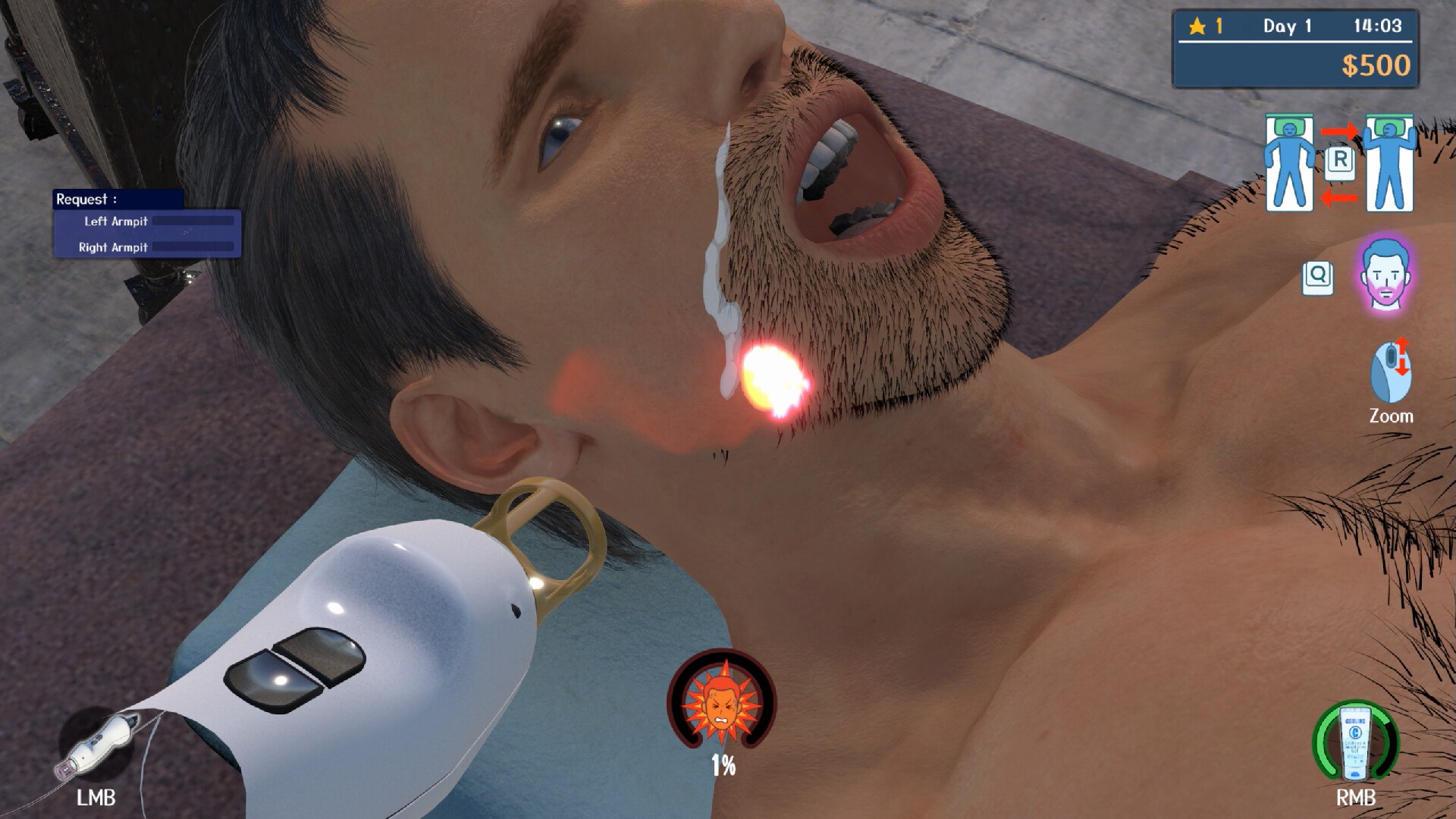
The publisher’s release preview describes mouse-controlled tools ranging from blades and lasers to exaggerated options such as duct tape and black holes. An appointment is judged by both the removal work and the customer’s experience, so rushing can undermine the result even when the visible hair disappears.
The Pain meter makes that tradeoff part of play. The official game description connects excessive laser use with pain and poor reviews, while numbing cream and cooling products provide ways to manage the treatment. Those are fictional business-simulation mechanics, not an attempt to teach an actual salon procedure.
Customer satisfaction then affects traffic. Better reviews bring more clients, while a damaged reputation reduces demand. That creates a link between the small-scale action and the management layer: a more expensive machine or an extra employee is only useful if the appointments sustain the business that pays for it.
Selling, staffing and expanding
Aftercare sales depend on reading a client’s budget. The game distinguishes affordable options from premium packages, giving the player a reason to vary the pitch instead of offering the same expensive service to everyone. Income can be reinvested in equipment, additional treatment beds and renovations.
Hiring also involves balancing staff ability against salary. The announcement presents this alongside direct treatment work, so expanding the salon is not simply a visual upgrade to the room; it changes the cost structure and how many tasks the player can delegate.
Fever Mode provides the comic interruption. Filling the hair-removal meter turns the treatment room into a dance-floor sequence with music and a disco ball. It fits the game’s exaggerated tone, while the underlying progression remains tied to appointments, reviews and reinvestment.
The full game is listed as single-player with Steam achievements and Steam Cloud. Its six listed interface/subtitle languages include English, Japanese, both Chinese variants, Korean and Spanish. The demo offers a way to assess the hands-on tool controls before launch; the complete story, later equipment and wider salon progression belong to the full version.
Have a correction or a useful perspective?
Get in touch with the publication.