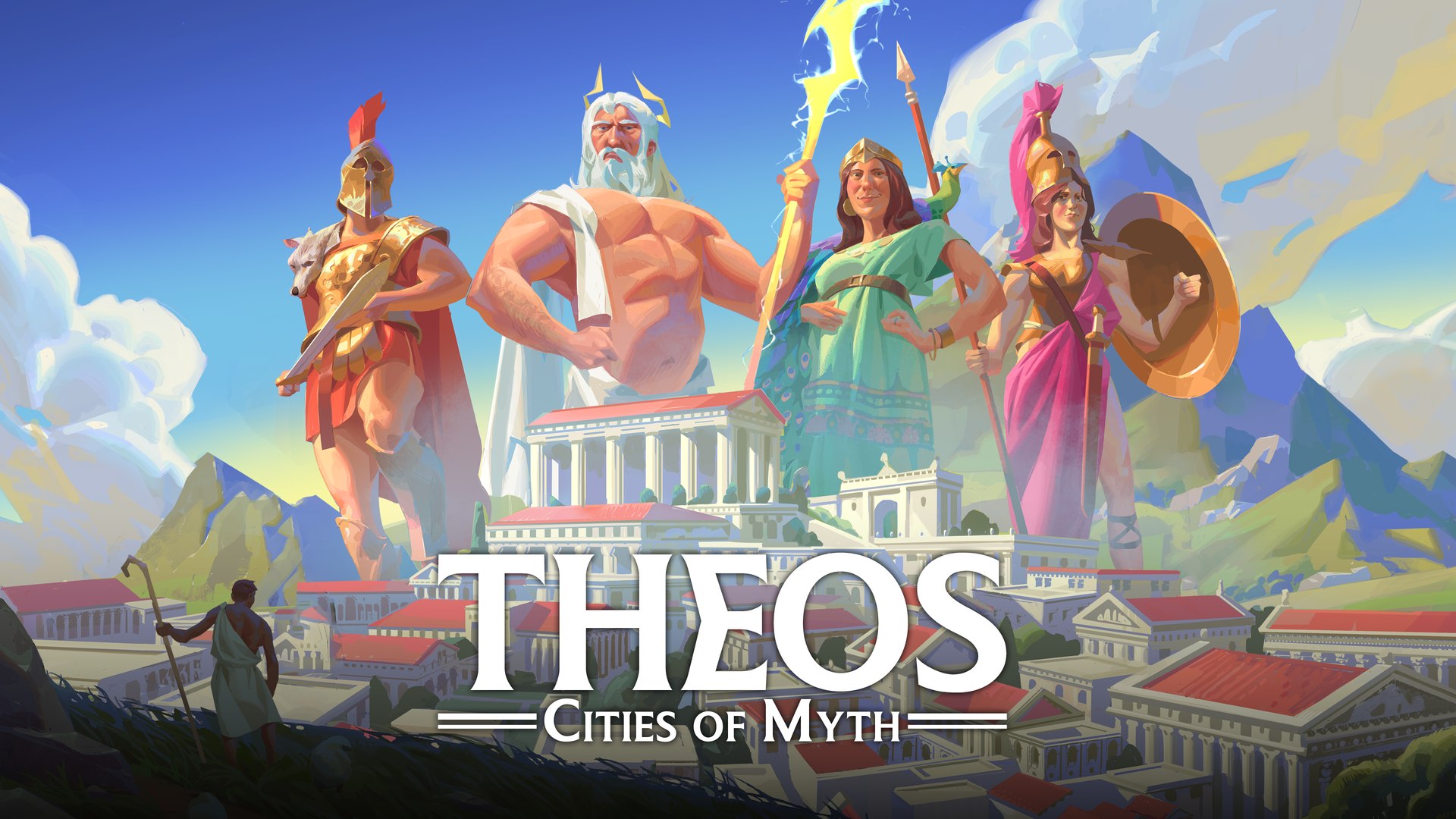
Theos: Cities of Myth is now available on PC through Steam, pairing the practical work of running an ancient Greek city with the expectations of a divine patron. Triskell Interactive and Dotemu released the game on November 4 at a regular U.S. price of $19.99, with a 20% introductory discount scheduled through November 11.
Triskell previously developed Pharaoh: A New Era, and the launch announcement positions Theos as another modern interpretation of the classic city-building approach. It is a separate game with its own Greek setting, rather than an expansion for Pharaoh. Its seven patrons are Zeus, Athena, Hermes, Ares, Poseidon, Hera and Dionysus.
Two modes change how the city opens up
The most important choice for a new player is between Adventure and Sandbox. The developer’s mode breakdown explains that Adventures introduce buildings progressively, using a particular god’s requests to guide the city’s development. Other cities appear on the world map as objectives become more demanding, rather than presenting the entire regional situation at once.
Great People and Heroes also enter at prescribed chapters. Some decorative rewards belong to particular adventures: the Minotaur Statue, for example, is associated with the Athens Adventure. Colonies arrive during dedicated chapters, and players can switch between them and the capital. That structure gives the campaign a defined progression through the game’s management tools.
Sandbox removes those narrative restrictions. Buildings and other cities are available from the beginning, world events are randomized, and players can choose a patron with the selected map’s resources in mind. Great People and Heroes are available throughout, allowing different combinations without waiting for a campaign chapter. The distinction is therefore more substantial than simply switching off story dialogue.
Supply networks still have to work
The game’s store description puts ordinary city logistics alongside worship. Roads connect people with goods and services; markets, production and storage need to support one another. Schools, theaters and temples add further demands on the layout as a settlement develops.
Beyond the city, other states respond to the player’s decisions. Trade, alliances and territorial competition are available ways to deal with them, while colonies can support further growth. The chosen god also encourages a direction: Hermes is associated with commerce, Athena with culture and Ares with military strength. A sanctuary and other religious buildings help maintain that relationship.
For someone arriving from the recent demo, the full release opens the broader choice between those authored adventures and flexible sandbox cities. For a newcomer, Adventure’s staged access to buildings provides a practical introduction to the supply systems before Sandbox exposes the complete set at once. Both approaches still revolve around the same tension: building a city that can meet its residents’ needs while pursuing the ambitions of its patron.
Have a correction or a useful perspective?
Get in touch with the publication.