ACTION GAME MAKER G version 2.1 expands both where games can be made and where they can be exported. Released November 4, the update adds macOS and Linux editors alongside the existing Windows application, while new export targets cover macOS, Linux and iOS.
Those are two different changes. Editor support determines which computer can run the development tools; export support determines which platforms can run the resulting game. An iOS export option does not mean that ACTION GAME MAKER G itself is now an iPhone editing app.
Apple support has a hardware boundary
KADOKAWA’s platform announcement specifies Apple Silicon Macs, starting with M1, and macOS 11 or later. Intel-based Macs are outside the supported environment. The same Apple Silicon restriction applies to exported macOS games.
Exporting for iOS requires an Apple Silicon Mac with Xcode installed. A developer working on Windows or Linux therefore still needs the stated Apple setup to produce that target. The new virtual gamepad feature helps add touchscreen controls and can also be used for Android and HTML5 projects.
The Linux requirements identify distributions from 2020 onward, with Ubuntu 20.04, Debian 11 and Fedora 32 among the examples. Together with Windows, Android and HTML5, the additions bring the listed export targets to six.
Visual scripts and project loading change too
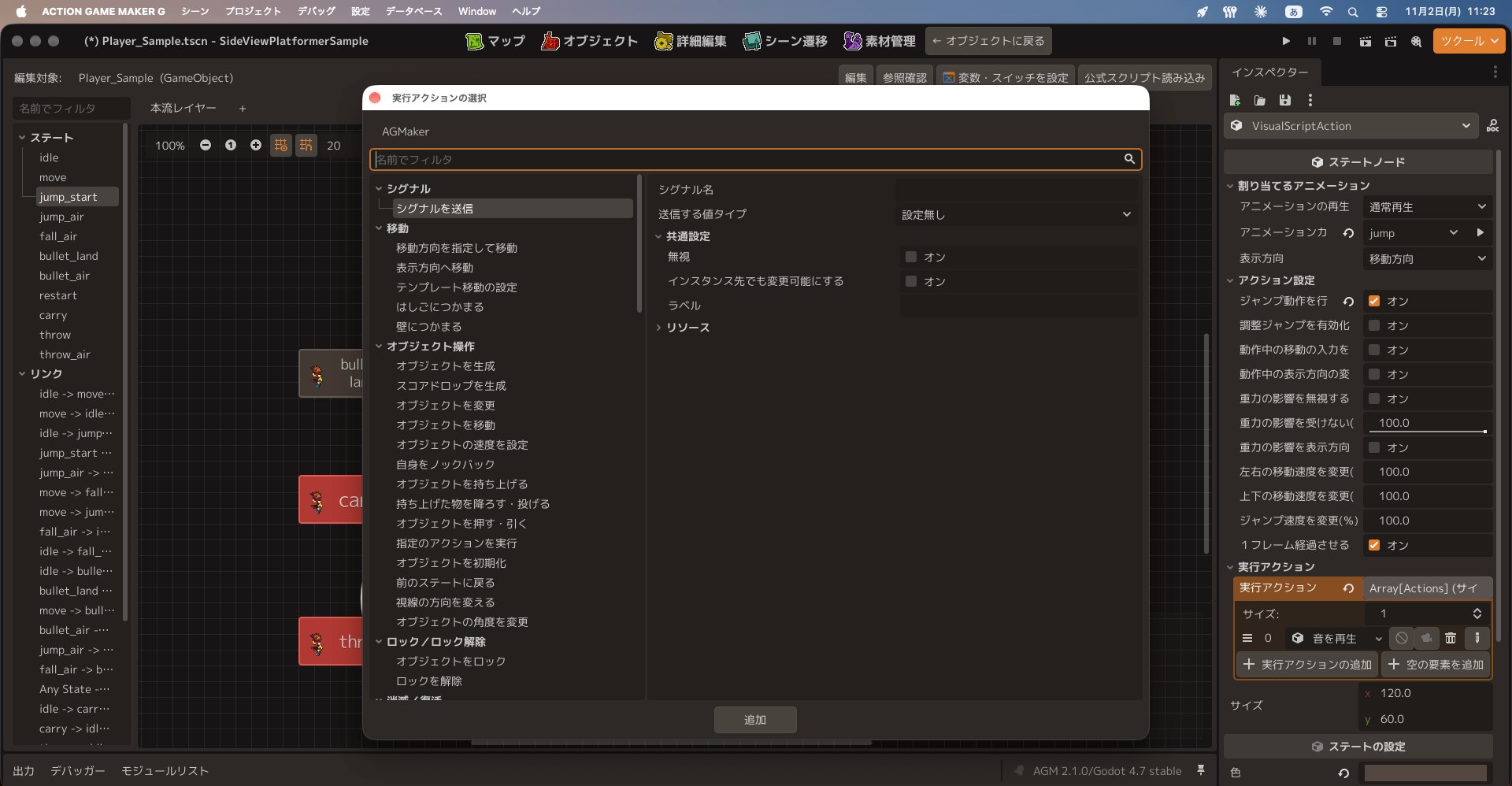
The 2.1.0 release notes describe a larger text area for visual-script states and animation thumbnails that make each state’s assigned animation visible. This is an editing change aimed at reading and arranging logic, separate from adding platform builds.
Projects also load in stages instead of loading everything at startup. The developer says this shortens initial opening, with some loading deferred until a tab is first used. The tradeoff is explicit: less waiting before entering the project can mean a later pause when opening a previously unused section.
The software overview explains the underlying workflow through states such as running, jumping and attacking, joined by conditions that determine when to switch. Maker Mode separates maps, objects, transitions and assets into focused tabs, while the original interface remains available.
The tool is based on Godot and supports more than side-scrolling action, including top-down action games, puzzles and bullet-hell projects. Its built-in systems include saving/loading, damage handling and local multiplayer, with GDScript available for developers who want to create additional visual-script actions or conditions.
The demo’s limit is exporting
To accompany the platform expansion, the publisher extended the Steam demo’s availability through November 30. It includes the editor’s features apart from exporting games. That makes it suitable for testing the new interface and whether a supported Mac or Linux setup runs the editor, but it cannot demonstrate a finished export from the trial itself.
For an existing project, the practical checks are the development machine, the intended export target and the input scheme. Version 2.1 adds options in all three areas, with the Apple hardware requirement remaining a concrete boundary when planning an iOS build.
Have a correction or a useful perspective?
Get in touch with the publication.