Raw Power Games says it has lost the funding needed to continue building Chronicles: Medieval, putting both the medieval sandbox and the studio at risk. The developer’s October 30 statement says talks are taking place with potential sources of help, but it does not announce a replacement deal.
The studio describes Early Access as close enough to be within reach. That does not establish a finished build, a secured launch date or enough resources to support the game afterward. The previously discussed early-2027 window now sits behind a more immediate question: whether development can be financed at all.
The statement published by Raw Power is explicit about the risk of closure while saying the team is still seeking a way forward. Describing the game as already canceled would go beyond that statement. So would treating a new funding agreement as likely or assuming that wishlists alone can close the gap.
A commander who also fights in the battle
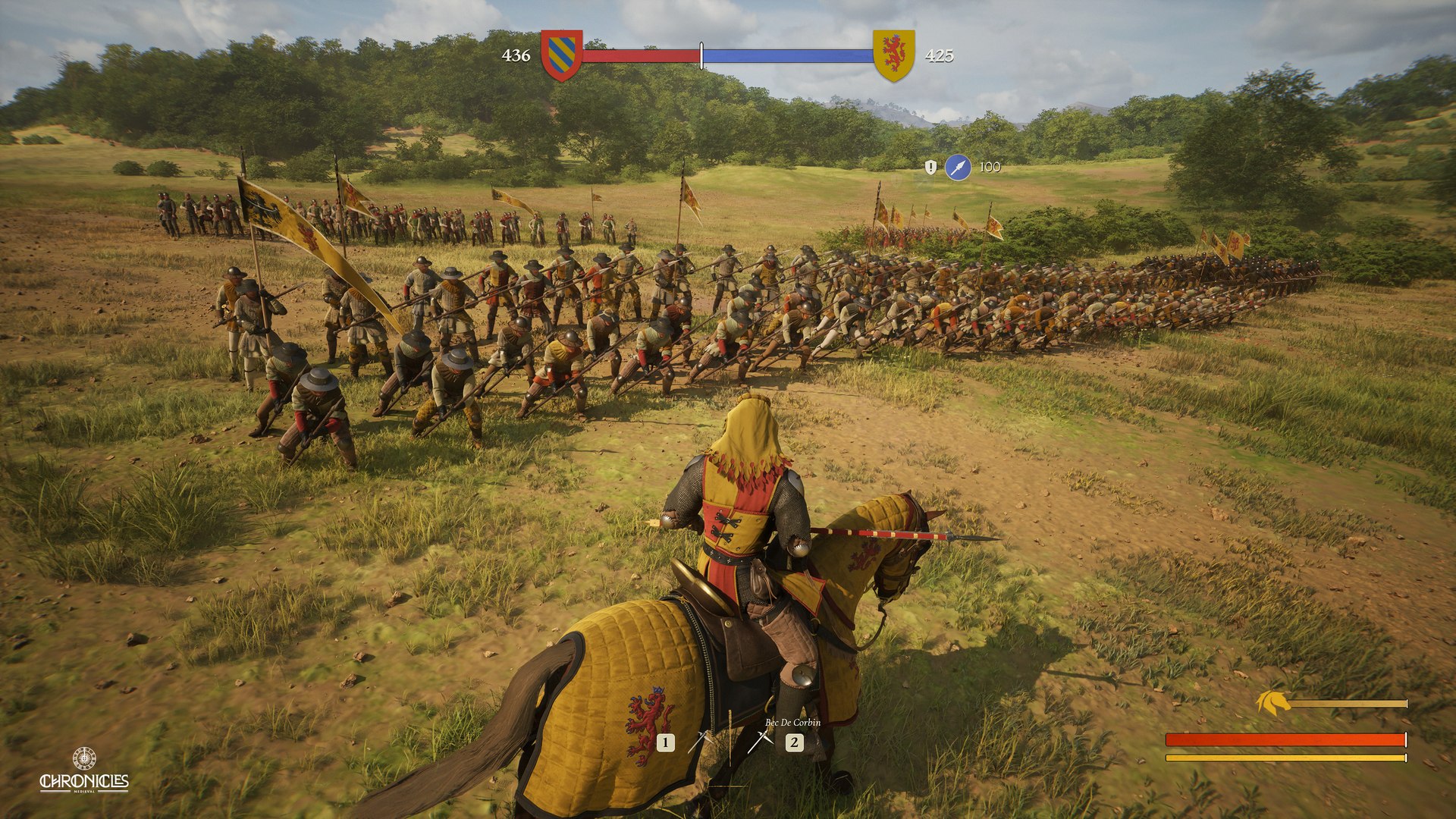
Chronicles: Medieval’s store description presents a sandbox in which the player develops a character, raises an army and fights in a changing medieval Europe. Battles combine real-time orders with direct participation: the player can position units, then fight alongside them.
The announced unit types include longbowmen, men-at-arms, crossbowmen and cavalry, each with a distinct battlefield function. The broader world includes traveling enemy forces and shifting faction power. Those features explain the game’s intended scope; they do not establish that every advertised system is ready for an Early Access release.
The store also frames Early Access as the foundation for later expansion, including additional content and modding support. Continued development is therefore part of the project’s own description, making the funding warning relevant to more than the date of its first public build.
A heraldry diary shows what the team was developing
Three days before the funding statement, Raw Power published a detailed diary about coats of arms. It describes work with Adam Tuck, Lancaster Herald at the College of Arms, to research historically plausible designs for noble families. Surviving records inform the designs, while gaps in the evidence require plausible reconstruction.
The game’s first chapter begins in 1313. Heraldry is intended to communicate personal and family allegiance rather than simply decorate troops with modern national colors. The diary connects that research to an in-game coat-of-arms designer and to the player’s changing status.
A new character begins with a plain, single-color shield. More elaborate personal heraldry is treated as something to grow into, connecting customization with the journey from an unknown soldier toward greater standing. The designer’s interface was still being refined when the diary appeared.
The sequence of those announcements captures the project’s position more clearly than either one alone: the studio was publicly explaining individual systems while facing a threat to its ability to keep making them. The next decisive development will be a concrete continuation or closure announcement. Until then, the public record contains an active search for support and an unresolved release plan.
Have a correction or a useful perspective?
Get in touch with the publication.