CaTHaRSiS: The last of atelier will include Photo Mode in its full release, with publisher Kodansha announcing December 1 as the launch date. The new camera tools respond to feedback from the demo, whose painting-inspired environments led players to ask for more control over how they frame a scene.
The distinction between announcement and availability matters here. Photo Mode is planned for the finished PC game, not already included in the current demo. The headline has been clarified accordingly in this November 6 update. Steam currently displays November 30, while Kodansha’s Japanese announcement specifies December 1; those listings are reported as shown rather than treated as proof of a newly announced delay or acceleration.
A camera inside the paintings
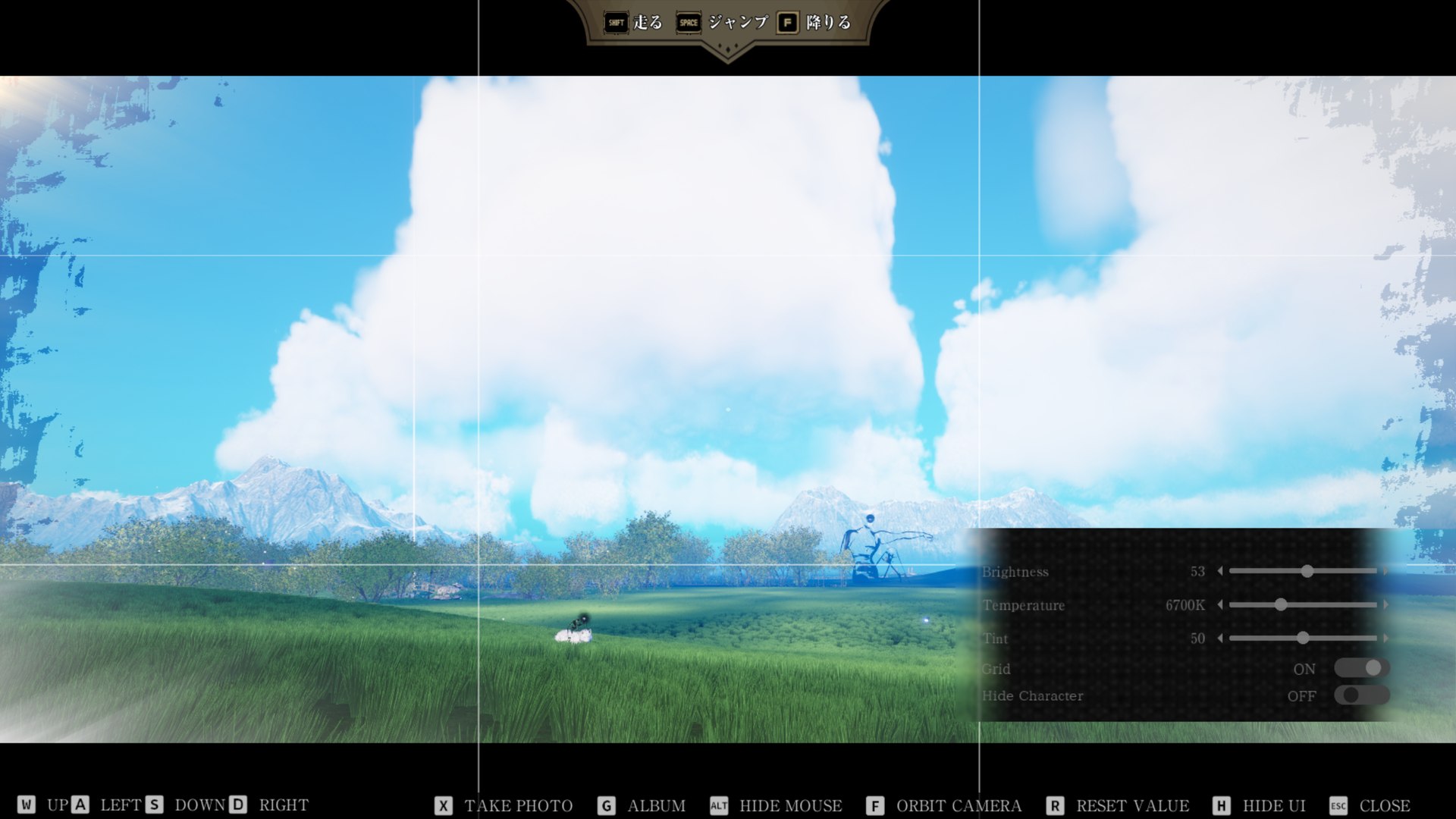
Kodansha’s release announcement says entering Photo Mode pauses the game. Players can move the camera freely, alter its angle and brightness, hide characters and save images to an album. This allows a composition to focus on the environment itself or include the traveler as part of the scene.
In a conventional painting, the artist fixes the viewer’s framing. Here, the game first turns the artwork into a navigable space, then lets the player choose another viewpoint within that interpretation. Hiding the character can help recreate the feeling of an unoccupied landscape; leaving the character visible can instead emphasize scale or the journey through it.
That is a practical reason for the feature beyond collecting screenshots. A location can be revisited as a photographic subject after its immediate story purpose is complete, without a moving camera or ongoing action forcing the same composition every time.
Ten worlds and two companions
The official Steam overview describes a protagonist who begins without memory or a clear identity. A wolf and an owl accompany the traveler through ten worlds, gathering memories that gradually fill that absence.
The named inspirations include Van Gogh’s The Starry Night, Café Terrace at Night and Sunflowers, Monet’s Woman with a Parasol and Klimt’s The Kiss. They are reinterpreted as environments, not presented as a digital museum in which the player simply moves between framed reproductions.
The Japanese announcement also describes changes in perspective and movement between stages, including freely explored 3D areas, side-scrolling sections and travel by boat. The animal companions support different ways of moving through these spaces. There are no game-over conditions or time limits, and the publisher estimates individual stages at roughly 10–20 minutes, leaving players free to linger.
What is available to try
The existing demo contains two stages based on Van Gogh’s night scenes and Millais’ Ophelia. Kodansha estimates about 15 minutes per stage, while explicitly allowing slower exploration. It is a sample of traversal and atmosphere rather than a demonstration of the newly announced photography tools.
Mana develops the single-player adventure, with Kodansha publishing. The store lists English, Japanese and Simplified Chinese interface/subtitle support. Players interested in the relationship between the paintings and movement can explore the demo now; the camera adjustments and image album belong to the full release.
Have a correction or a useful perspective?
Get in touch with the publication.